
Termites may be small, but the damage they cause can be significant.
Unlike many household pests, termites can remain hidden inside soil, walls, wooden structures and other concealed areas while they continue to damage a property. By the time visible signs appear, an infestation may already have been developing for some time.
For homeowners, property managers, contractors and businesses in Oman, understanding the early warning signs of termites can help prevent costly damage.
In this guide, we explain termite control in Oman, how to identify termite activity, what attracts termites, how professional treatment works and how you can protect your property.
What Are Termites?
Termites are social insects that live in colonies. They feed primarily on materials containing cellulose, including wood and other plant-based materials.
Depending on the species and environment, termites may build colonies in soil, wood or other protected locations.
The main concern for property owners is their ability to reach structural and wooden components while remaining largely hidden.
This makes termite prevention and early detection particularly important.
Why Is Termite Control Important in Oman?
Buildings in Oman can contain materials and construction features that may provide opportunities for termite activity.
Wooden doors, frames, furniture and other cellulose-containing materials can potentially be affected.
Termites can also access buildings through soil and concealed routes, making an infestation difficult to detect without a proper inspection.
Untreated termite activity can potentially result in:
- Damage to wooden structures
- Weakening of affected materials
- Damage to doors and frames
- Damage to furniture
- Expensive repairs
- Difficult-to-detect structural problems
- Long-term property maintenance issues
The earlier termite activity is identified, the easier it can be to develop an appropriate management strategy.
What Are the Signs of Termites?
Termites are not always easy to see.
Instead, property owners often discover evidence of their activity.
Here are some signs to watch for.
1. Mud Tubes
Mud tubes are one of the most recognizable signs associated with subterranean termites.
They may appear on foundations, walls or other structures and provide protected routes between the colony and feeding areas.
If you notice unusual mud tubes around a building, professional inspection is recommended.
2. Damaged or Hollow-Sounding Wood
Termites can consume wood from inside.
A wooden surface may therefore appear relatively normal from the outside while the interior has been damaged.
Wood that sounds hollow when tapped or feels unusually weak should be investigated.
3. Discarded Wings
During certain stages of their life cycle, reproductive termites can leave the colony and swarm.
Afterward, you may find discarded wings near windows, doors, lights or other areas.
Finding large numbers of wings indoors can be a reason to arrange a termite inspection.
4. Cracked or Damaged Wood
Unexpected cracks, blistering or deterioration in wooden surfaces can sometimes be associated with termite activity.
These signs can have other causes as well, so professional identification is important.
5. Swarming Termites
Winged termites may appear around a property during swarming periods.
If you see flying insects that appear to be termites, do not simply remove the visible insects and assume the problem is solved.
The presence of swarmers may indicate that a colony is nearby.
Where Do Termites Hide?
Termites prefer protected environments.
Depending on the species, they may be found in or around:
- Soil
- Foundations
- Wooden structures
- Wall voids
- Door frames
- Window frames
- Furniture
- Storage areas
- Moist areas
- Cracks and concealed spaces
Because termite colonies can remain hidden, finding the source may require a detailed inspection.
Bed Bug Treatment in Oman: Complete Guide to Control & Prevention
Read this blog
What Causes Termite Infestations?
There is rarely one single cause.
Several conditions can increase the opportunity for termite activity, including:
- Moisture problems
- Leaking pipes
- Poor drainage
- Wood in contact with soil
- Unprotected timber
- Cracks and structural gaps
- Construction debris
- Stored wooden materials
- Poorly maintained areas around buildings
Reducing these conditions can be an important part of termite prevention.
Can Termites Damage a House?
Yes.
Termites can damage wooden components and other cellulose-containing materials.
The extent of damage depends on factors such as the termite species, colony size, access to the structure, duration of activity and type of material affected.
Because termite damage can remain hidden, property owners should not wait for major structural damage before investigating suspicious signs.
How Does Professional Termite Control Work?
Effective termite management starts with understanding the property and the source of the infestation.
Step 1: Property Inspection
A professional technician examines areas where termite activity may occur.
The inspection may include:
- Foundations
- External walls
- Wooden structures
- Door and window frames
- Moisture-prone areas
- Soil around the property
- Visible termite signs
- Potential entry points
Step 2: Termite Identification
Different termite species can behave differently.
Correct identification helps determine an appropriate management strategy.
Step 3: Assess the Extent of Activity
The technician evaluates whether activity appears to be isolated or whether there are indications of a larger infestation.
Step 4: Select the Treatment Strategy
Treatment depends on the building, termite species, infestation and surrounding conditions.
Professional termite management may involve targeted treatment and preventive measures appropriate for the property.
Step 5: Prevention and Monitoring
Long-term termite control should not stop after the initial treatment.
Monitoring and preventive recommendations can help reduce the risk of future activity.
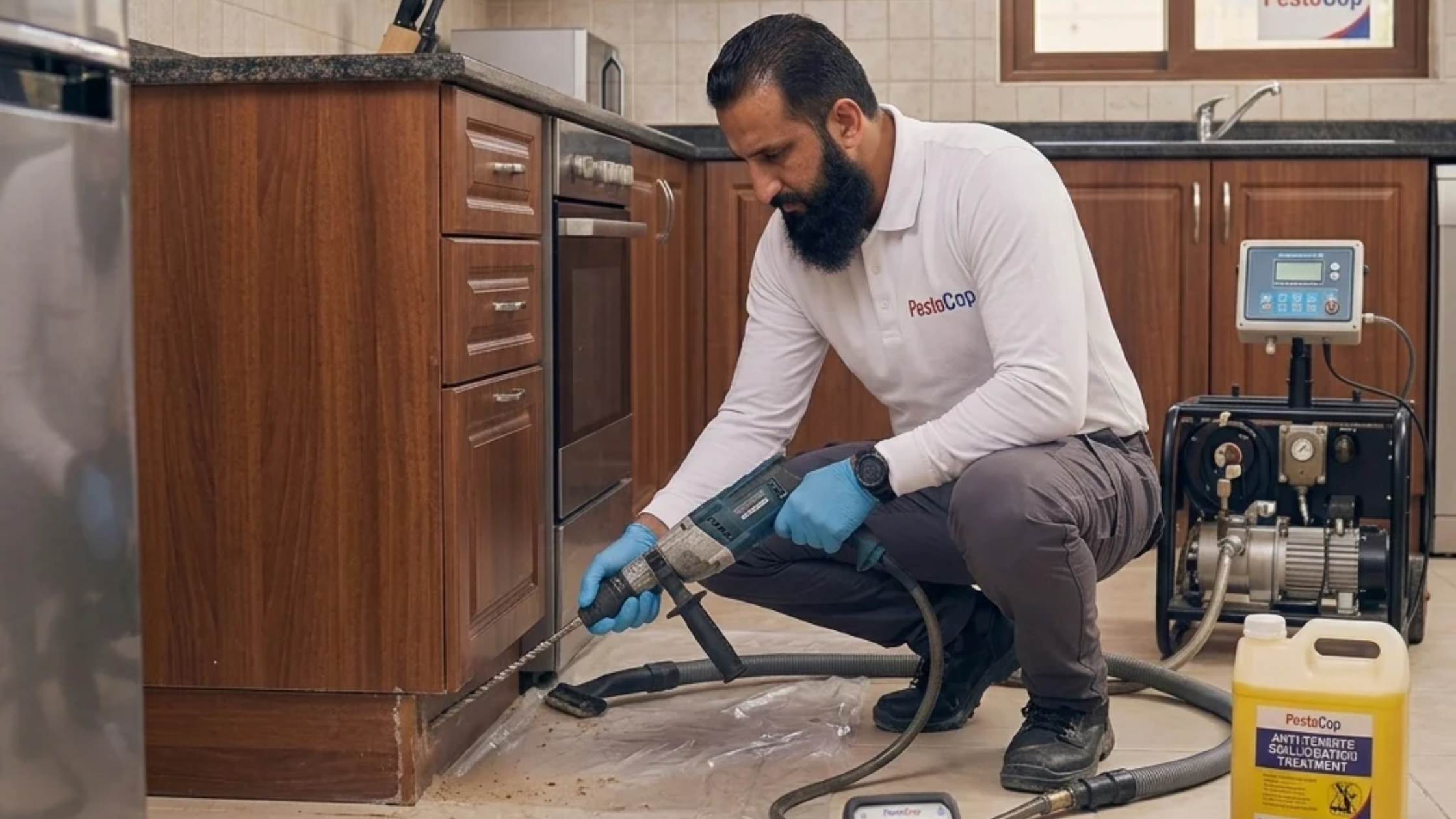
What Is Anti-Termite Treatment?
Anti-termite treatment refers to measures designed to protect a building from termite activity.
Depending on the stage of construction and property requirements, termite protection may involve preventive measures during construction or treatment of an existing building.
For new construction, planning termite protection before the building is completed can be particularly valuable because certain areas become difficult to access after construction.
Termite Control for New Construction in Oman
Preventing termites during construction can be easier than addressing an established infestation later.
Construction projects should consider termite risks during the planning and building stages.
Areas that may require attention include:
- Foundations
- Soil around structures
- Wooden components
- Entry points
- Service penetrations
- Construction joints
- Areas where soil and building materials interact
A professional pest management company can help identify appropriate termite prevention measures for a project.
Termite Control for Existing Buildings
Existing buildings can also be inspected and treated when termite activity is suspected.
Homeowners should not assume that an older building is automatically protected against termites.
Similarly, a property that has never experienced visible termite activity may still benefit from preventive inspection, particularly when there are conditions that could attract termites.
10 Common Pest Problems in Oman and How to Prevent Them
Read this blog
How Can You Prevent Termites?
Complete prevention is not always possible, but several practical measures can reduce termite risk.
Control Moisture
Repair leaks and address unnecessary moisture around the building.
Maintain Drainage
Ensure water is not consistently accumulating around foundations or other structural areas.
Keep Wood Away From Soil
Where possible, avoid unnecessary direct contact between untreated wood and soil.
Remove Wood Debris
Do not allow unused wood, cardboard or construction materials to accumulate around the property.
Inspect Regularly
Regular inspection can help identify early signs before damage becomes extensive.
Seal Potential Entry Points
Cracks and openings should be inspected and addressed where appropriate.
Are Termites the Same as Flying Ants?
No.
Winged termites and flying ants can look similar, especially during swarming periods.
However, there are differences in body shape, antennae and wings.
Because identification can be difficult, it is better to have suspicious insects professionally identified rather than assuming they are harmless flying ants.
Can You Get Rid of Termites Yourself?
DIY products may provide temporary control in some situations, but termite infestations can be difficult to eliminate without identifying the colony and understanding how termites are accessing the property.
Simply treating visible termites may not address the underlying infestation.
Professional termite control focuses on identifying activity, determining the extent of the problem and developing a treatment and prevention strategy.
How Much Does Termite Control Cost in Oman?
The cost of termite control varies from property to property.
Factors that can influence the cost include:
- Property size
- Type of building
- Extent of infestation
- Termite species
- Areas affected
- Treatment method
- Accessibility
- Required follow-up
- Preventive requirements
For this reason, a professional inspection is usually a better way to determine the appropriate solution than relying on a standard price.
Termite Control for Commercial Properties
Termites can also affect commercial buildings, offices, hotels, warehouses, educational facilities and other properties.
For businesses, termite management should consider both pest control and property protection.
A commercial termite programme may include:
- Scheduled inspections
- Preventive treatment
- Monitoring
- Documentation
- Identification of risk areas
- Follow-up inspections
- Recommendations for corrective action
For facility managers, identifying termite activity early can help prevent disruption and reduce potential repair costs.
Why Choose Professional Termite Control in Oman?
Termite infestations can be hidden, extensive and difficult to diagnose accurately.
Professional pest management provides a structured approach that can include inspection, identification, treatment, prevention and monitoring.
PestoCop provides termite management solutions in Oman for residential and commercial properties, including anti-termite protection and pest management programmes.
Its approach focuses on identifying pest risks and addressing the underlying conditions that allow pest activity to continue.
Frequently Asked Questions About Termites
What is the best termite treatment in Oman?
The appropriate treatment depends on the termite species, property type, extent of activity and construction conditions. A professional inspection should be carried out before deciding on the treatment approach.
How do I know if my house has termites?
Look for signs such as mud tubes, damaged or hollow-sounding wood, discarded wings, swarming termites and unexplained damage to wooden structures. If you are unsure, arrange a professional inspection.
Can termites live inside walls?
Yes. Depending on the termite species and building construction, termites may access concealed areas such as wall voids and structural spaces.
Do termites go away on their own?
It is not advisable to assume that termites will disappear on their own. If a colony has access to a suitable food source, activity may continue until the underlying problem is addressed.
How often should a property be inspected for termites?
The ideal inspection frequency depends on the property, its termite risk, construction and previous activity. Properties with known risks or previous infestations may require more regular monitoring.
Can termites be prevented?
Termite risk can be reduced through preventive construction measures, moisture management, regular inspections, proper maintenance and professional pest management.
Are termites only a problem for old buildings?
No. Both new and existing buildings can experience termite activity. Preventive termite protection is therefore relevant during construction as well as after a building is completed.
Final Thoughts
Termites can remain hidden while causing damage, which is why early detection and prevention are so important.
If you notice mud tubes, damaged wood, discarded wings, termite swarmers or other suspicious signs, do not wait for the problem to become severe.
A professional termite inspection in Oman can help identify whether termite activity is present and determine the most appropriate way to protect the property.
For homes, commercial buildings and construction projects, proactive termite management can help protect the property and reduce the risk of expensive damage.
If you suspect termites, contact PestoCop for professional termite control in Oman and arrange an inspection.
One Response