
Maintaining a clean and pest-free restaurant is essential for protecting customers, employees and your business reputation. In Oman, restaurants, cafés, hotels and commercial kitchens need effective pest management to maintain hygienic environments and reduce the risks associated with pest infestations.
Restaurant pest control in Oman involves identifying, preventing, monitoring and controlling pests such as cockroaches, rats, mice, flies and ants in food preparation and dining environments.
Even a small pest problem can create serious challenges for a restaurant. Pests can contaminate food, damage property, affect customer confidence and create difficulties during hygiene inspections.
Professional pest management is therefore an important part of restaurant operations and food safety management.
At PestoCop Oman, we provide pest management solutions designed for commercial and residential environments. Our ERD methodology – Exclusion, Restriction and Destruction – focuses on preventing pest entry, removing conditions that attract pests and controlling existing pest activity.
In this guide, discover common restaurant pest problems, effective prevention methods and how professional pest control can help protect your food business.
Why Is Restaurant Pest Control Important?
Restaurant pest control is important because pests can contaminate food, spread harmful microorganisms, damage kitchen equipment and create unhygienic working conditions.
Restaurants have several conditions that can attract pests, including:
- Food preparation and storage areas.
- Cooking equipment and kitchen appliances.
- Drains and wastewater systems.
- Waste collection areas.
- Delivery entrances and loading zones.
- Moisture and water leakage.
- Food residues and grease accumulation.
Without appropriate preventive measures, these conditions can encourage pest activity.
A professional pest management programme helps restaurant owners identify potential problems early and maintain better control over their premises.
What Are the Most Common Restaurant Pests in Oman?
Different pests require different management methods. Identifying the pest correctly is the first step towards selecting an effective treatment.
1. Cockroaches
Cockroaches are among the most concerning pests in commercial kitchens.
They often hide in dark, warm and moist locations, including:
- Kitchen cupboards and cabinets.
- Behind refrigerators and cooking equipment.
- Drainage areas.
- Wall cracks and structural gaps.
- Food storage locations.
Cockroaches can contaminate food preparation surfaces and equipment.
Prevention tips:
- Clean kitchen surfaces regularly.
- Remove food residues and grease.
- Keep food containers sealed.
- Inspect drains and concealed spaces.
- Seal cracks and gaps.
- Arrange professional inspections.
Targeted gel treatments, monitoring and appropriate sanitation measures can help manage cockroach activity.
2. Rats and Mice
Rodents can create serious problems for restaurants because they may contaminate food, damage packaging and electrical wiring, and leave droppings in storage areas.
They commonly enter buildings through:
- Gaps beneath doors.
- Open drainage connections.
- Wall openings.
- Utility and service penetrations.
- Unprotected delivery entrances.
Prevention tips:
- Seal structural openings.
- Store food in secure containers.
- Keep waste bins covered.
- Remove unnecessary storage clutter.
- Inspect loading and receiving areas.
- Use suitable professional rodent monitoring systems.
A structured rodent management programme helps identify activity and reduce the possibility of recurring infestations.
3. Flies
Flies are particularly problematic in food preparation and dining areas.
They can move between waste, contaminated surfaces and food-contact areas.
Common contributing conditions include exposed waste, food residues, standing water and poorly maintained drains.
Prevention tips:
- Keep waste containers covered.
- Clean food waste immediately.
- Maintain drainage systems.
- Install suitable insect screens.
- Consider UV insect light traps in appropriate locations.
- Keep doors closed where practical.
4. Ants
Ants may enter restaurants in search of food and water.
They can appear around countertops, storage cabinets, floors and wall openings.
Good sanitation, food storage practices and identification of entry routes are important steps in managing ant activity.
5. Stored-Product Insects
Certain insects can infest dry food products, grains, flour, cereals and packaged ingredients.
Restaurant operators should regularly inspect food deliveries, rotate stock and maintain clean storage environments.
General Pest Control in Oman: Complete Guide for Homes & Businesses
Read this blog
How Does Professional Restaurant Pest Control Work?
Professional restaurant pest control should follow a systematic process rather than relying only on occasional pesticide applications.
An effective programme typically involves the following steps.
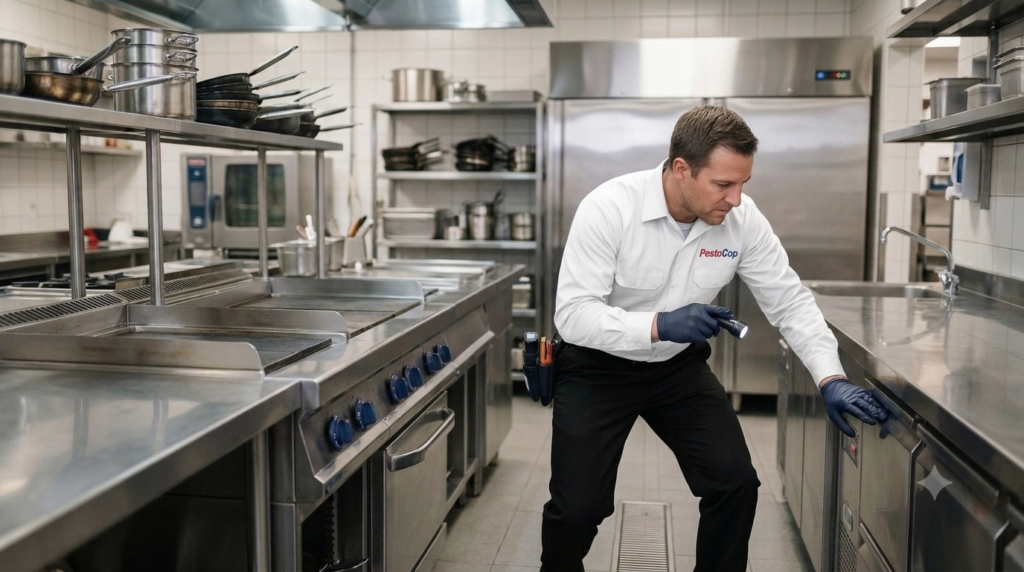
Step 1: Initial Inspection
A pest management technician assesses the restaurant to identify pest activity, possible entry points and conditions encouraging infestations.
The inspection may cover kitchens, food storage areas, dining spaces, drains, waste areas and external surroundings.
Step 2: Pest Identification and Risk Assessment
Different pests require different treatment methods.
The technician identifies the pest species, assesses the extent of activity and considers the restaurant’s operating conditions.
Step 3: Preventive Recommendations
The restaurant receives practical recommendations covering sanitation, food storage, waste disposal, structural repairs and pest exclusion.
Step 4: Targeted Pest Treatment
Where treatment is necessary, appropriate methods are selected according to the pest, location and risk assessment.
Methods may include targeted gel applications, monitoring stations, suitable traps and other professional pest management techniques.
Treatments should follow product instructions and applicable safety requirements, with appropriate precautions around food and food-contact surfaces.
Step 5: Monitoring and Reporting
Follow-up monitoring helps determine whether pest activity has reduced and whether additional corrective actions are needed.
Service reports can help restaurant managers understand inspection findings and monitor recurring problems.
What Is Integrated Pest Management for Restaurants?
Integrated Pest Management (IPM) is a preventive approach that combines inspection, sanitation, exclusion, monitoring and targeted treatment.
It is particularly useful for restaurants because pest management must be coordinated with daily food preparation and hygiene procedures.
A restaurant IPM programme generally includes:
Inspection: Identifying pest activity and possible infestation sources.
Sanitation: Maintaining clean kitchens, food storage areas and waste disposal facilities.
Exclusion: Sealing cracks, gaps and other pest entry points.
Monitoring: Using appropriate monitoring devices and regular inspections.
Targeted treatment: Selecting suitable control methods when pest activity is identified.
Documentation: Maintaining inspection records, treatment details and corrective action reports.
The objective is to reduce pest activity while supporting a clean and well-managed food preparation environment.
PestoCop’s ERD Methodology for Restaurant Pest Management
PestoCop uses an ERD approach: Exclusion, Restriction and Destruction.
This methodology focuses on addressing the causes of pest problems while managing existing pest activity.
Exclusion – Prevent Pest Entry
Exclusion focuses on preventing pests from entering restaurant premises.
Recommended measures include:
- Sealing cracks and wall openings.
- Installing suitable door sweeps.
- Protecting windows and ventilation openings.
- Securing utility penetrations.
- Addressing gaps around drainage and service connections.
Restriction – Remove Food, Water and Shelter
Restriction reduces the conditions that allow pests to survive.
Restaurants can support this approach by:
- Cleaning kitchen equipment and surfaces.
- Removing food residues.
- Maintaining dry storage areas.
- Managing waste properly.
- Repairing leaking pipes.
- Keeping food containers sealed.
Destruction – Control Existing Infestations
When pest activity is identified, suitable professional treatments are selected according to the pest species and site requirements.
This may involve targeted applications, traps, monitoring devices and specialist interventions.
All treatment activities should be coordinated with restaurant operations and food safety procedures.
Effective Pest Management Solutions for Homes and Businesses in Oman
Read this blog
How Does Pest Control Support HACCP and Food Safety?
Pest management is an important part of maintaining food hygiene and supporting HACCP-based food safety systems.
HACCP stands for Hazard Analysis and Critical Control Points. It is a systematic approach to identifying and managing food safety hazards.
A documented pest management programme can support food businesses by providing:
- Routine inspection records.
- Pest monitoring information.
- Treatment documentation.
- Pest activity observations.
- Corrective action recommendations.
- Follow-up inspection reports.
For restaurants, these records can help demonstrate that pest risks are being monitored and addressed.
However, pest control alone does not guarantee HACCP compliance. It should form part of the restaurant’s wider food safety management programme.
How Often Should Restaurants Schedule Pest Control?
The appropriate pest management frequency depends on the restaurant’s size, kitchen layout, pest history, food handling activities and environmental conditions.
Restaurants with high food preparation activity or recurring pest concerns may need more frequent monitoring.
A professional inspection can help determine an appropriate service schedule.
Restaurant managers should also conduct routine internal checks to identify signs of pest activity between professional visits.
10 Practical Tips to Prevent Pests in Restaurant Kitchens
Restaurant owners and kitchen managers can take several practical steps to reduce pest risks.
- Clean kitchen floors, counters and equipment regularly.
- Remove food waste promptly.
- Store ingredients in sealed containers.
- Keep waste bins covered and clean.
- Maintain drainage systems.
- Repair leaking pipes and taps.
- Seal cracks and gaps around doors and walls.
- Inspect incoming food deliveries.
- Keep storage areas organised.
- Arrange routine professional pest inspections.
These preventive measures should be incorporated into daily restaurant cleaning and maintenance procedures.
How to Choose the Best Restaurant Pest Control Company in Oman
Selecting a professional pest management provider is important for restaurants that want reliable and consistent pest prevention.
Before choosing a company, consider the following factors:
1. Commercial Experience: Does the provider understand the needs of restaurants, hotels and food service businesses?
2. IPM Approach: Does the company use inspection, monitoring and prevention alongside targeted treatments?
3. Safe Treatment Practices: Are treatment methods appropriate for food preparation environments?
4. Documentation: Can the provider supply inspection reports, treatment records and recommendations?
5. Flexible Scheduling: Can services be coordinated around kitchen operations?
6. Range of Services: Can the company manage cockroaches, rodents, flies, ants and other relevant pests?
7. Local Support: Can the provider service your restaurant’s location in Oman?
A good pest management partner should help prevent recurring issues, not simply respond after an infestation develops.
Why Choose PestoCop for Restaurant Pest Control in Oman?
PestoCop provides pest management services for commercial and residential properties across Oman.
Our approach focuses on understanding pest risks and recommending suitable management solutions for different environments.
Our capabilities include:
- General pest control.
- Cockroach and ant management.
- Rodent management.
- Fly and vector control.
- Integrated Pest Management.
- Anti-termite proofing.
- Bird control.
- Fumigation and sanitization.
Our ERD methodology combines exclusion, restriction and destruction to address pest activity and reduce conditions that encourage infestations.
We also emphasise monitoring, digital reporting and customised commercial pest management programmes.
Whether you operate a restaurant, café, hotel kitchen or food processing facility, PestoCop can help you assess your pest management requirements.
Looking for professional restaurant pest control in Oman?
Contact PestoCop today to discuss your restaurant’s pest management needs and arrange an inspection.
Phone: +968 9901 4848
Email: info@pestocop.om
Website: https://pestocop.om/
Frequently Asked Questions About Restaurant Pest Control in Oman
1. Why do restaurants need professional pest control?
Restaurants need professional pest control to prevent pest infestations, reduce food contamination risks, protect their reputation and maintain hygienic food preparation environments.
2. What are the most common pests in restaurant kitchens?
Common restaurant pests include cockroaches, rats, mice, flies, ants and stored-product insects.
3. How can restaurants prevent cockroaches?
Restaurants can prevent cockroaches through regular cleaning, proper food storage, waste management, drainage maintenance, structural sealing and professional pest inspections.
4. Is pest control important for HACCP?
Yes. A documented pest management programme can support a restaurant’s HACCP-based food safety system by providing inspection, monitoring, treatment and corrective action records.
5. Are pest control treatments safe for restaurants?
Treatments can be selected for commercial food environments using appropriate professional methods. Restaurants should follow all product instructions, food protection precautions and re-entry requirements.
6. How can restaurants prevent rats and mice?
Restaurants should seal entry points, maintain clean storage areas, secure food containers, manage waste and use suitable professional rodent monitoring systems.
7. What is IPM in restaurant pest control?
IPM is Integrated Pest Management. It combines inspections, sanitation, exclusion, monitoring and targeted treatments to manage pest risks.
8. Does PestoCop provide commercial pest control in Oman?
Yes. PestoCop offers commercial pest management solutions for businesses and properties in Oman. Contact the team to confirm availability for your location.
9. Can restaurant pest control be scheduled after working hours?
Pest management visits may be coordinated around restaurant operating hours, subject to service availability and the treatment requirements.
10. How can I book restaurant pest control in Oman?
Contact PestoCop at +968 9901 4848 or visit https://pestocop.om/ to discuss your requirements and arrange an inspection.
Conclusion: Protect Your Restaurant with Professional Pest Management
A clean and pest-free restaurant is essential for protecting customers, employees and business reputation.
Cockroaches, rodents, flies and other pests can create food hygiene concerns if they are not managed properly.
By combining regular inspections, sanitation, structural prevention and professional treatments, restaurant owners can reduce pest risks and maintain better control over their premises.
PestoCop’s ERD methodology provides a structured approach to pest management through Exclusion, Restriction and Destruction.
Keep your kitchen clean. Protect your food. Prevent pest infestations.
Contact PestoCop Oman today for professional restaurant pest control solutions.
Call +968 9901 4848 or visit https://pestocop.om/.