
Pests are more than an inconvenience. In Oman, insects and rodents can become a serious problem for homes, restaurants, warehouses, hotels, offices and other commercial properties.
A few cockroaches in a kitchen, signs of rodents in a warehouse, or early termite activity around a building can quickly turn into a larger infestation if the underlying cause is not addressed.
That is why effective pest control is not simply about spraying chemicals. Professional pest management combines inspection, prevention, targeted treatment, monitoring and follow-up to deal with the source of the problem.
If you are looking for reliable pest control in Oman, this guide explains the most common pest problems, how professional treatment works, when you should call an expert and how to keep pests from coming back.
What Is Pest Control?
Pest control is the process of preventing, managing and eliminating unwanted insects, rodents and other pests from homes, businesses and other properties.
Modern pest management focuses on more than killing visible pests. A professional technician first looks for:
- Where pests are entering the property
- Where they are hiding
- What is attracting them
- Where food and water are available
- Signs of nesting or breeding
- Structural gaps and other entry points
- Conditions that could cause the infestation to return
This approach is particularly important for commercial properties, where a pest problem can affect hygiene, operations, customer confidence and regulatory compliance.
Why Is Pest Control Important in Oman?
Oman’s climate and the way buildings are used can create favourable conditions for different types of pests.
Homes and businesses may experience problems with cockroaches, ants, rodents, mosquitoes, flies, termites, birds and other pests.
For a homeowner, an infestation can affect comfort and cleanliness. For a restaurant, hotel, warehouse or food-related business, the consequences can be much greater.
A pest problem can potentially:
- Contaminate food and working areas
- Damage property and equipment
- Affect hygiene standards
- Create unpleasant odours
- Disturb employees and customers
- Damage a company’s reputation
- Increase maintenance costs
- Become more difficult and expensive to control if ignored
For businesses, preventive pest management is often much better than waiting until an infestation becomes obvious.
What Are the Most Common Pest Problems in Oman?
Different properties experience different pest pressures. Some of the most common problems include the following.
1. Cockroach Control
Cockroaches are among the most common indoor pests. They can hide in kitchens, drains, storage areas, wall voids and other dark locations.
Seeing one cockroach does not always mean there is only one. Cockroaches can remain hidden while an infestation develops.
Professional cockroach control should therefore focus on identifying harbourage areas, food sources, moisture and possible entry points rather than simply treating the insects that are visible.
2. Rodent Control
Rats and mice can cause serious problems for homes, warehouses, restaurants, commercial buildings and logistics facilities.
Rodents can enter through surprisingly small openings and may hide behind equipment, inside storage areas, ceilings or other inaccessible spaces.
Effective rodent management may involve:
- Inspection
- Identifying entry points
- Baiting or trapping where appropriate
- Monitoring
- Exclusion and proofing
- Removing food and water sources
- Regular follow-up
The goal should be to control the current infestation while reducing the possibility of future activity.
3. Termite Control
Termites can cause structural damage because they feed on cellulose-containing materials such as wood.
One of the biggest challenges with termites is that damage may continue for some time before it becomes obvious.
Signs that may justify a professional termite inspection include:
- Damaged or hollow-sounding wood
- Mud tubes
- Discarded wings
- Cracks or areas of suspected termite activity
- Swarming insects around the property
For new construction and larger projects, preventive anti-termite measures can also be considered during the construction process.
4. Bed Bug Control
Bed bugs can be extremely difficult to eliminate because they hide in mattresses, bed frames, furniture, cracks and other concealed locations.
Common signs include:
- Small blood spots on bedding
- Dark spots around mattresses or furniture
- Shed skins
- Live bed bugs
- Repeated bites or irritation after sleeping
DIY treatments may not reach every hiding location. Professional inspection and treatment can help determine the extent of the infestation and the appropriate control method.
5. Ant Control
Ants can enter buildings through tiny gaps and may establish nests around or inside a property.
Simply killing visible ants may not solve the problem because the colony can remain active.
Professional ant control focuses on identifying trails, nesting locations and entry points while reducing the conditions that attract ants.
6. Fly and Mosquito Control
Flies and mosquitoes can be particularly troublesome around restaurants, hotels, outdoor areas and properties with standing water or other breeding sources.
Effective management is not only about treating adult insects. It is also important to identify and reduce breeding and attraction sources wherever possible.
How Does Professional Pest Control Work?
A professional pest control programme normally starts with an inspection.
Step 1: Inspection
The technician assesses the property and looks for signs of pest activity, entry points, harbourage areas, moisture, food sources and other contributing factors.
Step 2: Pest Identification
Different pests require different control strategies.
Correct identification helps determine the most appropriate treatment rather than relying on a one-size-fits-all approach.
Step 3: Treatment Plan
The treatment should be based on the type of pest, severity of the infestation, property type and areas affected.
For commercial properties, treatment may also need to take account of operating hours, food-handling areas, employees and customers.
Step 4: Prevention
The long-term objective is not simply to eliminate pests that are visible today.
Potential entry points, food sources, water sources and harbourage conditions should also be addressed.
Step 5: Monitoring and Follow-Up
Some infestations require more than one visit.
Monitoring helps determine whether pest activity has decreased and whether additional action is necessary.
What Is Integrated Pest Management?
Integrated Pest Management, commonly known as IPM, is a structured approach to controlling pests using a combination of prevention, monitoring and targeted treatment.
Instead of depending entirely on chemical applications, IPM considers the conditions that allow pests to survive and reproduce.
This can include:
- Inspection
- Monitoring
- Exclusion
- Sanitation
- Habitat modification
- Targeted treatments
- Follow-up inspections
For commercial properties, this approach can provide a more systematic way to manage pest risks.
What Is the ERD Pest Control Method?
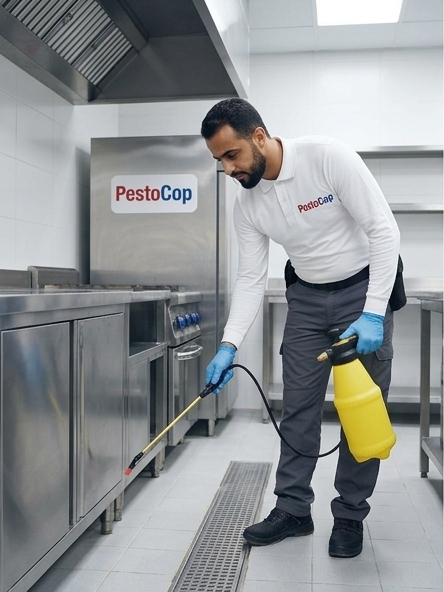
At PestoCop, pest management is built around an ERD approach: Exclusion, Restriction and Destruction.
Exclusion
The first objective is to reduce opportunities for pests to enter.
This may involve identifying gaps, cracks, openings and other potential access points.
Restriction
The next step is to reduce the conditions that allow pests to survive.
This can include addressing food, water, waste and harbourage sources.
Destruction
Once the conditions have been addressed, targeted methods can be used to control or eliminate the existing infestation.
This approach is designed to address the cause of pest activity rather than relying only on visible pest removal.
Is Pest Control Safe for Homes, Children and Pets?
Safety depends on the product, application method, concentration, location and instructions provided by the pest management professional.
Professional pest control should always be carried out according to the product label and applicable safety requirements.
Before treatment, homeowners should ask the pest control provider:
- What treatment will be used?
- Which areas will be treated?
- How long should people stay away?
- When can children and pets return?
- Are food and cooking surfaces protected?
- Are there preparation instructions?
A professional provider should clearly communicate any precautions that customers need to follow.
How Often Should a Business Have Pest Control?
There is no single schedule that works for every business.
The ideal frequency depends on factors such as:
- Type of business
- Size of the facility
- Pest risk
- Location
- Food handling activities
- Previous infestation history
- Building condition
- Storage practices
- Regulatory and customer requirements
Restaurants, food processing facilities, hotels, warehouses and other high-risk businesses may benefit from a structured pest management programme rather than waiting for a pest sighting.
Commercial Pest Control in Oman
Commercial properties need a different approach from a typical residential pest treatment.
A business may require:
- Scheduled inspections
- Pest monitoring
- Digital service records
- Bait mapping
- Treatment reports
- Preventive recommendations
- Emergency response
- After-hours treatment
- Compliance documentation
PestoCop provides commercial pest management for sectors including warehousing and logistics, food processing and service, hotels and hospitality, healthcare, corporate offices, educational institutions, facility management and government facilities.
10 Common Pest Problems in Oman and How to Prevent Them
Read this blog
Pest Control for Restaurants and Food Businesses
Restaurants and food businesses need to take pest prevention particularly seriously.
Cockroaches, rodents and flies can create hygiene concerns and potentially damage customer trust.
A professional programme should look beyond visible pests and consider:
- Kitchens
- Food storage areas
- Waste areas
- Drains
- Delivery areas
- Storage rooms
- External surroundings
- Potential pest entry points
Regular monitoring can help identify activity before it develops into a larger infestation.
How Can You Prevent Pests at Home?
Professional treatment is only one part of pest prevention.
Homeowners can reduce pest activity by:
- Keeping food in sealed containers.
- Cleaning food spills quickly.
- Avoiding standing water.
- Keeping rubbish containers closed.
- Repairing leaking pipes and taps.
- Sealing cracks and gaps where practical.
- Keeping storage areas organised.
- Cleaning kitchens and food preparation areas regularly.
- Checking doors, windows and other possible entry points.
- Contacting a professional when signs of an infestation continue.
The earlier a pest problem is identified, the easier it may be to manage.
When Should You Call a Pest Control Company?
You should consider professional pest control when you notice:
- Repeated pest sightings
- Pest droppings
- Nesting material
- Unusual smells
- Damage to wood or property
- Insect activity at night
- Multiple dead insects
- Signs of rodents
- Bed bug evidence
- Termite activity
- Pests returning after DIY treatment
A professional inspection can help determine whether the problem is isolated or part of a larger infestation.
How Do I Choose a Pest Control Company in Oman?
Before hiring a pest control provider, consider more than price.
Look for a company that can explain:
- What pest has been identified
- Why the infestation is occurring
- What treatment is recommended
- What products or methods will be used
- What preparation is required
- Whether follow-up visits are needed
- What prevention measures are recommended
- What documentation is provided for commercial properties
For businesses, it is especially important to choose a provider that understands the operational and compliance requirements of the facility.
Why Choose PestoCop for Pest Control in Oman?
PestoCop provides integrated pest management solutions for commercial and residential properties across Oman.
Its services include general pest control, rodent management, anti-termite proofing, fly and vector control, bird control and netting, fumigation and sanitization.
The company also focuses on its ERD methodology, certified technicians, low-toxicity solutions and digital reporting for commercial facilities.
For businesses where pest management and documentation are closely connected to daily operations, a structured pest management programme can provide greater visibility and control.
Frequently Asked Questions About Pest Control in Oman
What is the best pest control method in Oman?
The best method depends on the pest, property and severity of the infestation. Professional pest management generally combines inspection, prevention, monitoring and targeted treatment rather than relying on a single method.
How long does pest control take?
Treatment time varies according to the property, pest species and infestation level. A small residential treatment may require much less time than a large commercial facility or complex infestation.
Does pest control permanently get rid of pests?
No responsible pest control provider should suggest that one treatment guarantees that pests can never return. Long-term control depends on treatment, monitoring, sanitation, exclusion and correcting conditions that attract pests.
Is professional pest control better than DIY treatment?
DIY products can sometimes help with minor pest problems, but persistent or widespread infestations may require professional inspection and treatment. Professionals can also identify hidden sources and entry points that are easy to overlook.
Does PestoCop provide commercial pest control in Oman?
Yes. PestoCop provides commercial pest management solutions for sectors including logistics, food businesses, hospitality, healthcare, offices, education, facility management and government facilities.
Does PestoCop provide residential pest control?
Yes. PestoCop provides residential pest control solutions, including selected pest and termite treatments for villas and apartments.
Final Thoughts
Pest control is most effective when it focuses on the reason pests are present, not just the pests that are visible.
Whether you are protecting a family home, restaurant, hotel, warehouse, office or industrial facility, a combination of inspection, prevention, monitoring and targeted treatment can help reduce pest risks.
If you are dealing with a current infestation or want to establish a preventive pest management programme, professional assessment is a good place to start.
Need professional pest control in Oman? Contact PestoCop to arrange an inspection and discuss the right pest management solution for your property.
One Response