
Mosquitoes can make outdoor spaces uncomfortable and create concerns for homes, hotels, restaurants, workplaces and other commercial properties. Gardens, balconies, drainage areas, water containers and poorly maintained outdoor spaces can provide conditions that encourage mosquito activity.
Effective mosquito control in Oman starts with identifying and reducing breeding sites, managing standing water, improving property maintenance and using suitable professional control methods when necessary. Spraying alone may reduce visible adult mosquitoes temporarily, but it will not solve the problem if breeding sources remain.
This guide explains why mosquitoes become a problem, where they breed, how property owners can prevent mosquito activity and when professional pest management may be appropriate.
Why Is Mosquito Control Important in Oman?
Mosquito activity can affect residential comfort, outdoor dining, hospitality facilities, landscaped areas and commercial operations.
Properties with gardens, irrigation systems, water storage containers, drains and outdoor recreational facilities should pay particular attention to mosquito prevention.
Effective mosquito management can help:
- Reduce mosquito activity around occupied spaces.
- Identify and address potential breeding locations.
- Make gardens, balconies and outdoor seating more comfortable.
- Support cleaner and better-maintained property environments.
- Reduce recurring mosquito problems around buildings.
- Protect the experience of guests, residents, employees and visitors.
Mosquito management is not simply about removing insects that are already flying around. It also involves understanding why they are present and addressing the environmental conditions that support their development.
Where Do Mosquitoes Breed?
Mosquitoes generally require water to complete their life cycle. Depending on the species, even relatively small amounts of standing water may provide suitable breeding conditions.
Common areas to inspect include:
1. Drains and Drainage Channels
Blocked or poorly maintained drainage systems may collect water and organic material.
Inspect outdoor drains, channels, inspection chambers and low-lying areas where water may remain after cleaning, irrigation or rainfall.
2. Water Storage Containers
Open containers, buckets, tanks and other water-holding equipment can become potential breeding locations.
Keep suitable water storage systems covered and inspect their surroundings regularly.
3. Plant Pots and Garden Equipment
Water may collect in plant saucers, discarded containers, decorative objects and garden equipment.
Remove unnecessary water-holding items and empty containers that are not being used.
4. Roofs, Balconies and Outdoor Structures
Flat surfaces, roof corners, unused equipment and poorly maintained outdoor structures can collect rainwater or water from cleaning activities.
Include these locations in routine property inspections.
5. Gardens and Landscaped Areas
Overwatering, leaking irrigation systems and poorly drained landscaping can create wet areas where mosquitoes may develop.
Review irrigation schedules, repair leaks and improve drainage where water repeatedly collects.
6. Swimming Pool Surroundings and Water Features
Swimming pools and decorative water features should be properly maintained. Pay attention to stagnant water in nearby containers, unused equipment and poorly circulating sections.
The surrounding area can be just as important as the main water feature.
Bird Control in Oman: Bird Netting & Prevention Guide
Read this blog
Common Signs of Mosquito Activity
Recognising mosquito activity early can help property owners investigate possible breeding sources.
Look for:
- Mosquitoes frequently appearing around the same outdoor locations.
- Increased activity during particular times of the day.
- Insects gathering near shaded or humid areas.
- Repeated mosquito complaints from residents, guests or employees.
- Standing water in containers, drains or landscaping.
- Small larvae moving in water-holding containers.
Larvae may appear as small, moving organisms near the water surface. If you find them, avoid handling the water unnecessarily and investigate how the container can be emptied, cleaned or managed safely.
A professional inspection can help identify whether the activity is caused by mosquitoes and determine the appropriate response.
How to Prevent Mosquitoes Around Your Property
Prevention should be the first part of any mosquito management programme.
1. Remove Standing Water
Inspect your property regularly and empty unnecessary water-holding containers.
Pay attention to:
- Buckets and unused pots.
- Plant saucers.
- Discarded packaging.
- Outdoor equipment.
- Open containers.
- Water collected around air-conditioning or drainage equipment.
Where water must be stored, use suitable covers and maintain the container properly.
2. Maintain Drainage Systems
Keep drains and drainage channels free from debris that can obstruct water flow.
Repair damaged drainage systems and investigate locations where water remains for extended periods.
3. Maintain Gardens and Landscaping
Avoid excessive irrigation and check for leaking sprinkler systems.
Trim overgrown vegetation where appropriate and remove unnecessary clutter that makes inspection and maintenance difficult.
4. Cover Water Storage
Use appropriate covers for tanks and other water storage containers.
Inspect covers periodically to make sure they remain secure and do not leave openings that allow mosquitoes to enter.
5. Maintain Outdoor Areas
Keep outdoor seating areas, gardens, balconies and waste collection points clean.
Remove discarded containers and other materials that may collect water. Arrange regular maintenance checks for areas that are not inspected during everyday cleaning.
6. Use Personal Protection Where Appropriate
When spending time outdoors, use suitable mosquito repellents according to their product instructions.
Wear clothing that reduces exposed skin when mosquito activity is high. Window screens and other suitable physical barriers can also help reduce mosquito entry into indoor spaces.
Professional Mosquito Control: What Does It Involve?
When mosquito activity continues despite preventive maintenance, a professional assessment may help identify the source and determine suitable control measures.
A responsible mosquito management programme should consider the property layout, mosquito activity, potential breeding locations and the presence of residents, guests, employees, pets and sensitive areas.
Depending on the inspection findings, a programme may include:
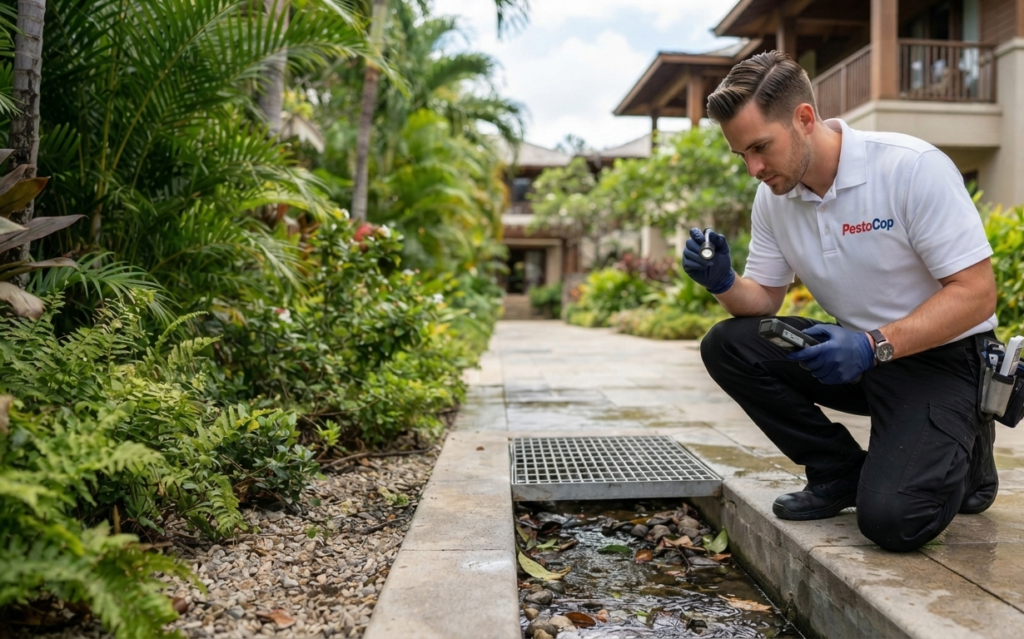
Site Inspection
The property is assessed to identify areas where mosquitoes may rest, enter or breed.
This can include drainage systems, gardens, water-holding containers, outdoor structures and building surroundings.
Breeding Source Management
Where possible, the focus should be on removing or correcting conditions that allow mosquitoes to breed.
This may involve recommending drainage improvements, water management, container maintenance and other corrective actions.
Targeted Treatment
Where treatment is appropriate, suitable methods may be selected based on the location and nature of the mosquito problem.
The choice of product and application method should consider the intended use of the area, people who may be present and applicable safety instructions.
Follow-Up Monitoring
After corrective measures or treatment, follow-up inspections can help assess whether mosquito activity has reduced and whether additional action is needed.
This is particularly useful for properties with recurring outdoor mosquito problems.
Mosquito Control for Different Types of Properties
Different properties have different mosquito management requirements.
Mosquito Control for Homes and Residential Communities
Homes may have gardens, balconies, roof spaces, water containers and outdoor seating areas that need regular attention.
Residents can reduce mosquito breeding opportunities by removing standing water, maintaining drainage and keeping outdoor spaces organised.
Residential communities should also consider shared spaces such as landscaped gardens, common drains, waste areas and recreational facilities.
Mosquito Control for Hotels and Resorts
Hotels and resorts often have large outdoor areas, landscaped gardens, pools, restaurants and guest recreation facilities.
A mosquito management programme should include:
- Inspection of gardens and outdoor seating.
- Monitoring of drainage and irrigation systems.
- Maintenance of water features.
- Inspection of guest-facing outdoor areas.
- Coordination with housekeeping and maintenance teams.
- Appropriate treatment planning around occupied areas.
Preventive inspections are particularly useful before periods of high occupancy or increased outdoor activity.
Mosquito Control for Restaurants and Cafés
Restaurants with outdoor dining areas may experience guest discomfort when mosquitoes are active.
Management teams should inspect nearby drains, waste areas, planters and water-holding objects. Outdoor cleaning routines should include checking for standing water.
Any professional treatment should be planned carefully around food preparation, food storage, service areas and customer access.
Mosquito Control for Offices and Commercial Buildings
Commercial properties may have landscaped entrances, parking areas, roof drainage, cooling equipment and outdoor employee spaces.
Facility managers should include these areas in routine maintenance schedules and arrange further assessment when mosquito activity persists.
Termite Control in Oman: Protecting Your Property from Hidden Damage
Read this blog
Why Spraying Alone May Not Solve a Mosquito Problem
One common mistake in mosquito management is focusing only on adult mosquitoes.
A treatment that reduces the number of visible flying mosquitoes may provide temporary relief, but the problem can return if breeding locations remain active.
For example, treating an outdoor seating area will not necessarily resolve mosquito activity if water continues to collect in a nearby drain, container or poorly maintained landscape.
A more effective approach combines:
- Identification of breeding locations.
- Removal or management of standing water.
- Drainage and maintenance improvements.
- Appropriate treatment where required.
- Continued inspection and monitoring.
This prevention-focused approach helps address the conditions contributing to mosquito activity rather than relying exclusively on repeated treatments.
Integrated Pest Management for Mosquito Control
Integrated Pest Management (IPM) combines inspection, prevention, monitoring and targeted control.
For mosquito management, IPM can be organised around the following steps:
1. Inspect: Identify areas with standing water, mosquito activity and potential breeding conditions.
2. Prevent: Remove unnecessary water sources, maintain drainage and correct property maintenance issues.
3. Monitor: Review mosquito activity and inspect locations where problems have occurred previously.
4. Control: Use suitable professional control methods when preventive measures alone are insufficient.
5. Review: Evaluate results and recommend further improvements where necessary.
This approach can be adapted to residential properties, hotels, restaurants, offices and larger commercial facilities.
Choosing a Professional Mosquito Control Company in Oman
Before selecting a pest management provider, consider the following points:
Inspection-based service: The provider should assess the property and identify likely sources of mosquito activity.
Prevention-focused recommendations: Ask whether the service includes advice on drainage, standing water and property maintenance.
Appropriate treatment methods: Treatment should be selected according to the location, pest activity and safety requirements.
Clear communication: Property owners and facility managers should understand what areas are being treated and what precautions are necessary.
Follow-up support: Ask how the provider evaluates results and handles recurring mosquito activity.
Experience with different properties: Homes, hotels and commercial facilities may require different inspection and treatment plans.
How PestoCop Can Help With Mosquito Management in Oman
PestoCop provides pest management services for residential and commercial properties in Oman.
Mosquito-related concerns can require a combination of property inspection, environmental prevention and suitable control measures. The most appropriate approach depends on the property’s layout, mosquito activity and potential breeding sources.
PestoCop can discuss pest management requirements for homes, hospitality properties and commercial facilities, helping identify relevant service needs and preventive priorities.
To enquire about pest management services, visit PestoCop’s services page.
Contact PestoCop:
- Phone: +968 9901 4848
- Email: info@pestocop.om
- Website: https://pestocop.om/
Frequently Asked Questions About Mosquito Control in Oman
1. How can I prevent mosquitoes around my home in Oman?
Remove standing water, maintain drains, cover water storage containers, avoid excessive irrigation and regularly inspect gardens, balconies and outdoor equipment.
2. Where do mosquitoes usually breed?
Mosquitoes commonly breed in water-holding locations such as containers, blocked drains, plant saucers, unused equipment and poorly maintained water features. Breeding locations vary by mosquito species.
3. Does spraying permanently eliminate mosquitoes?
Not necessarily. Spraying may reduce adult mosquito activity, but new mosquitoes can emerge if breeding sources remain. Effective management should also address standing water and other contributing conditions.
4. How often should a property be inspected for mosquitoes?
Inspection frequency depends on property size, outdoor facilities, water management and previous mosquito activity. Properties with extensive landscaping or recurring issues may need more frequent checks.
5. How can hotels reduce mosquito activity in outdoor areas?
Hotels should inspect gardens, drains, irrigation systems, pools and water features. Removing standing water, maintaining landscaping and arranging suitable professional assessments can help reduce mosquito activity.
6. Can mosquitoes breed in small amounts of water?
Yes. Depending on the species, some mosquitoes can use relatively small water-holding containers as breeding sites. Regularly empty and clean unnecessary containers.
7. Why do mosquitoes keep returning after treatment?
Mosquitoes may return when breeding locations remain untreated or new water-holding areas develop. Identifying and correcting the source is an important part of long-term prevention.
8. What is the difference between mosquito prevention and mosquito treatment?
Prevention focuses on removing breeding opportunities and reducing conditions that attract mosquitoes. Treatment uses suitable control methods to address existing mosquito activity. Both may be needed.
9. Is professional mosquito control suitable for commercial properties?
Yes. A suitable programme can be planned for offices, hotels, restaurants, residential communities and other commercial properties, taking account of their facilities and operational requirements.
10. When should I contact a pest control company?
Consider a professional assessment when mosquito activity is persistent, widespread or difficult to manage through routine cleaning and water management, or when breeding sources are difficult to identify.
Conclusion
Mosquito control in Oman requires more than occasional spraying. Effective prevention begins with identifying breeding locations, removing unnecessary standing water, maintaining drainage systems and keeping outdoor areas clean.
Homes, hotels, restaurants and commercial facilities can benefit from regular inspections and a structured Integrated Pest Management approach. By addressing the conditions that support mosquito activity, property owners can make their surroundings more comfortable and easier to maintain.
For professional pest management enquiries in Oman, contact PestoCop to discuss your property’s requirements.