
Flies are more than an everyday nuisance. When they become common around a home, restaurant, office, warehouse, hotel or other commercial property, they can quickly become a hygiene and pest-management concern.
Because flies can move between waste, drains, food areas and other environments, simply killing the visible flies may not solve the underlying problem. Effective fly control in Oman focuses on identifying where flies are coming from, reducing conditions that attract them and using suitable control methods to manage recurring activity.
At PestoCop, Fly & Vector Control is designed to help residential and commercial properties address fly problems through a practical, targeted approach.
This guide explains what attracts flies, how to identify an infestation and what you can do to prevent flies from becoming a recurring problem.
What Is Fly Control?
Fly control is the process of preventing, reducing and managing unwanted fly activity around a property.
An effective fly-control program may involve:
- Identifying fly activity and potential sources
- Improving sanitation and waste management
- Inspecting drains and damp areas
- Reducing access points
- Using suitable monitoring methods
- Applying targeted pest-control treatments where appropriate
- Monitoring the property after treatment
The objective is not simply to eliminate visible flies. It is to address the conditions that allow fly activity to continue.
Why Is Fly Control Important?
A few flies around a property may seem harmless, but frequent fly activity can become difficult to manage.
Flies are often associated with food waste, organic material, drains and other areas where microorganisms and food sources may be present. Their movement between different surfaces can make them an important hygiene consideration, particularly in food-related and commercial environments.
Professional fly control services in Oman can therefore be valuable for businesses that need to maintain clean and well-managed premises.
This is especially relevant for:
- Restaurants
- Cafés
- Hotels
- Food businesses
- Supermarkets
- Warehouses
- Offices
- Schools
- Residential properties
- Commercial buildings
- Industrial premises
What Attracts Flies?
Understanding what attracts flies is one of the first steps toward controlling them.
Common attractants can include:
Food Waste
Uncovered food waste can attract flies, particularly when waste is allowed to accumulate.
Organic Material
Decaying organic material can provide an attractive environment for certain fly species.
Poor Waste Management
Overflowing or poorly maintained waste containers can contribute to fly activity.
Drains
Some fly problems may be associated with drains or areas where organic material accumulates.
Moisture
Damp areas can create conditions that are favorable for certain types of flies.
Food Preparation Areas
Restaurants, kitchens and food-handling areas need particular attention because food residue and waste can attract flies.
How Do You Know You Have a Fly Infestation?
Seeing one or two flies does not necessarily mean there is an infestation.
However, repeated or increasing fly activity may indicate that there is a nearby breeding or food source.
Look for signs such as:
- Flies appearing every day
- Increasing numbers of flies
- Flies concentrated around kitchens or food areas
- Flies around garbage containers
- Fly activity near drains
- Flies around doors and windows
- Maggots or larvae in waste or organic material
- Fly activity returning shortly after cleaning
If flies continue appearing despite regular cleaning, it is worth investigating where they are coming from.
Common Types of Flies Found Around Buildings
Different fly species behave differently, so identification can help determine the appropriate control strategy.
Common flies encountered around properties can include:
- House flies
- Fruit flies
- Drain flies
- Blow flies
- Other nuisance fly species
The source of the problem can vary considerably.
For example, fruit flies may be associated with food and fermenting organic material, while drain flies may be linked to organic buildup in drains or damp areas.
This is one reason why simply treating the visible insects may not provide a lasting solution.
How Does Professional Fly Control Work?
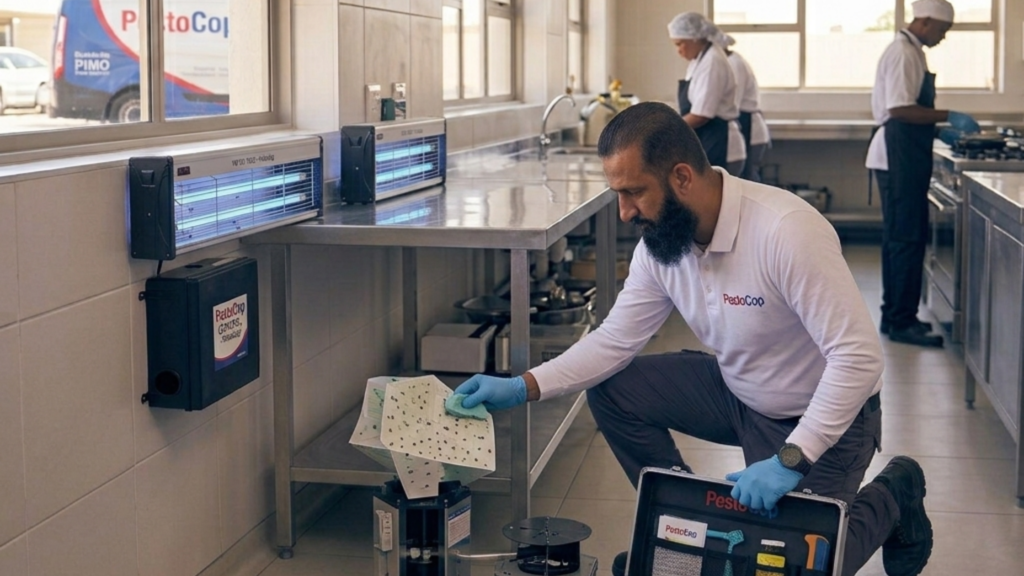
A professional fly-control program generally starts with identifying the source of the activity.
Step 1: Inspection
The affected areas are inspected to identify where flies are most active.
This may include kitchens, waste-storage areas, drains, entrances, food-preparation areas and other relevant locations.
Step 2: Source Identification
The next step is to determine what may be attracting or supporting the fly population.
Possible sources include:
- Food waste
- Organic material
- Poorly managed garbage
- Drains
- Moisture
- Open food
- Building access points
Step 3: Control Strategy
Once the likely source is identified, suitable control measures can be selected.
Depending on the situation, this may include sanitation improvements, exclusion, monitoring and targeted pest-control treatment.
Step 4: Treatment
Where professional treatment is appropriate, it should be applied according to the conditions of the property and the pest involved.
Step 5: Monitoring
Continued monitoring can help determine whether fly activity is decreasing and whether additional source-control measures are needed.
Why Killing Flies Alone Is Not Enough
One of the most common mistakes in fly control is focusing only on adult flies.
You may kill the flies that you can see, but if a breeding or food source remains, more flies can appear.
For example, if flies are repeatedly coming from an untreated waste area or drain, spraying the visible flies may only provide temporary relief.
A better approach is to ask:
Where are the flies coming from?
Once the source is identified, it becomes easier to develop an appropriate control plan.
Fly Control for Restaurants and Food Businesses
Restaurants and food businesses can be particularly vulnerable to fly activity.
Even a relatively small fly problem can become a concern when flies are present around:
- Kitchens
- Food preparation areas
- Dining areas
- Waste-storage areas
- Delivery entrances
- Storage rooms
- Drains
Businesses should combine professional pest management with strong sanitation practices.
Useful measures include:
- Keep food covered.
- Clean food spills promptly.
- Empty waste regularly.
- Keep garbage containers closed where practical.
- Clean drains regularly.
- Avoid leaving food residue on surfaces.
- Keep doors closed where practical.
- Repair damaged screens or other barriers.
- Monitor areas where flies are repeatedly seen.
Fly Control for Homes
Flies can enter homes through doors, windows and other openings, particularly when there are attractive food or waste sources nearby.
Homeowners can reduce fly activity by:
- Keeping kitchen surfaces clean
- Storing food properly
- Emptying garbage regularly
- Cleaning spills quickly
- Keeping food waste contained
- Checking drains for buildup
- Using suitable window or door screens
- Keeping doors closed when practical
If fly activity continues despite these measures, a professional inspection may help identify a hidden source.
How to Prevent Termite Damage in Oman: A Practical Guide for Homeowners and Businesses
Read this blog
What Is Vector Control?
Vector control is broader than ordinary fly control.
A vector is an organism capable of carrying and transmitting pathogens between people, animals or environments.
Vector-management programs aim to reduce exposure to disease-carrying organisms through appropriate prevention and control measures.
Depending on the property and the pest involved, vector-control strategies may include:
- Inspection
- Environmental management
- Source reduction
- Monitoring
- Exclusion
- Targeted pest control
The exact approach depends on the pest and the conditions found at the property.
Fly Prevention Tips for Businesses
Prevention is an important part of long-term fly management.
1. Manage Waste Properly
Keep waste contained and remove it regularly.
2. Keep Food Covered
Do not leave exposed food or food residue unnecessarily.
3. Clean Drains
Regular drain cleaning can help reduce conditions that may support certain fly problems.
4. Inspect Entry Points
Check doors, windows, vents and other potential access points.
5. Maintain Clean Food Areas
Clean food preparation and storage areas regularly.
6. Address Leaks and Moisture
Fix water leaks and avoid allowing unnecessary moisture to accumulate.
7. Monitor Fly Activity
If fly numbers begin increasing, investigate early rather than waiting for the problem to become severe.
Why Professional Fly Control Can Be Better Than DIY Treatment
DIY fly sprays may be useful for killing individual flies, but they do not always identify the source of recurring activity.
Professional fly control in Oman can provide a more systematic approach by looking at the entire property.
This can be particularly useful for businesses where fly activity may involve several areas at the same time.
A professional assessment can help determine:
- Where flies are entering
- Where they may be breeding
- What is attracting them
- Which areas require attention
- What prevention measures should be implemented
How Often Should Fly Control Be Done?
There is no single schedule that is suitable for every property.
The required frequency can depend on:
- Type of property
- Level of fly activity
- Food-handling operations
- Waste-management practices
- Environmental conditions
- Previous pest history
- Size of the premises
A residential property with an occasional fly problem may require a different approach from a restaurant or commercial facility with ongoing pest-management needs.
For businesses, regular monitoring can help identify problems before they become more difficult to manage.
How Much Does Fly Control Cost in Oman?
The cost of fly control in Oman depends on the specific property and the extent of the problem.
Factors that may affect the price include:
- Property size
- Type of business
- Level of infestation
- Source of the fly activity
- Number of areas requiring treatment
- Required treatment approach
- Frequency of service
- Follow-up or monitoring requirements
Because every property is different, an inspection is the best way to understand the problem and determine an appropriate service plan.
Frequently Asked Questions About Fly Control in Oman
How can I get rid of flies permanently?
There is rarely a single solution that works for every fly problem. Long-term control usually requires identifying the source, improving sanitation and waste management, reducing access and using appropriate pest-control measures.
What attracts flies to a house?
Food waste, exposed food, organic material, garbage, moisture and certain drains can attract flies.
Why do flies keep coming back after spraying?
If a breeding or food source remains, new flies may continue to appear after the visible adults have been killed. Identifying and addressing the source is an important part of effective fly control.
Is professional fly control necessary for a restaurant?
Professional pest management can be useful for restaurants because food preparation, waste and drainage areas can create conditions that attract flies. A suitable program can combine monitoring, prevention and targeted control.
Can flies come from drains?
Yes, certain fly species can be associated with drains and organic buildup. If flies repeatedly appear around drains, the area should be inspected and cleaned appropriately.
How can businesses prevent fly infestations?
Businesses should focus on waste management, sanitation, food storage, drain maintenance, access control and regular monitoring. Professional pest management can complement these measures.
What is the difference between fly control and vector control?
Fly control specifically focuses on managing flies. Vector control is a broader term covering the management of organisms that can transmit pathogens, depending on the pest and situation.
How much does fly control cost in Oman?
Pricing depends on the size and type of property, level of fly activity, treatment requirements and service frequency. A site assessment can provide a more accurate estimate.
Professional Fly & Vector Control in Oman
Recurring fly activity should not be treated as just a minor inconvenience.
If flies continue appearing around your home or business, the most important question is not simply “How do I kill the flies?” but “Why are the flies here?”
Finding the source and addressing the conditions supporting the activity can make fly management more effective.
PestoCop provides Fly & Vector Control services in Oman for residential and commercial properties. Our approach focuses on understanding the pest problem and selecting suitable control measures for the property.
Whether you are dealing with recurring flies around a restaurant, warehouse, office, residential property or other facility, professional assessment can help you identify the source and determine the next step.
Contact PestoCop today to discuss your fly and vector control requirements in Oman.
Final Takeaway
Effective fly control in Oman starts with understanding the source of the problem.
Cleaning visible flies or using occasional sprays may not be enough when a breeding or food source remains. A combination of sanitation, waste management, exclusion, monitoring and appropriate professional treatment can provide a more complete approach.
For homes and businesses experiencing recurring fly activity, addressing the problem early can help prevent it from becoming a larger and more persistent pest-management issue.