
Rats and mice can become a serious problem when they enter a home, restaurant, warehouse, hotel, office or industrial facility.
Rodents are not always easy to see. They are often active at night and can hide behind walls, ceilings, equipment, stored materials and other areas that are difficult to access.
By the time you see a rat running across the floor, there may already be signs of a larger infestation.
If you are looking for rodent control in Oman, this guide explains how to identify rodent activity, how rats and mice enter buildings, what attracts them, how professional treatment works and how to prevent them from coming back.
What Is Rodent Control?
Rodent control is the process of preventing, detecting, managing and eliminating rats and mice from a property.
Effective rodent management is not simply about catching or killing visible rodents.
A professional approach also looks at:
- Where rodents are entering
- Where they are nesting
- Where they find food
- Where they find water
- How they move around the property
- Where droppings are present
- Whether there are structural gaps
- How future rodent activity can be prevented
This makes prevention and exclusion an important part of long-term rodent management.
Why Is Rodent Control Important in Oman?
Rodents can cause problems in both residential and commercial properties.
A rodent infestation may affect:
- Food storage areas
- Kitchens
- Restaurants
- Warehouses
- Hotels
- Offices
- Staff accommodation
- Industrial facilities
- Shops
- Residential buildings
Rodents can contaminate areas with droppings and urine, damage materials and chew through certain items.
For businesses, a rodent problem can also create operational, hygiene and reputation concerns.
That is why early detection is important.
What Are the Signs of Rats or Mice?
You do not need to see a live rodent to know that one may be present.
Look for the following signs.
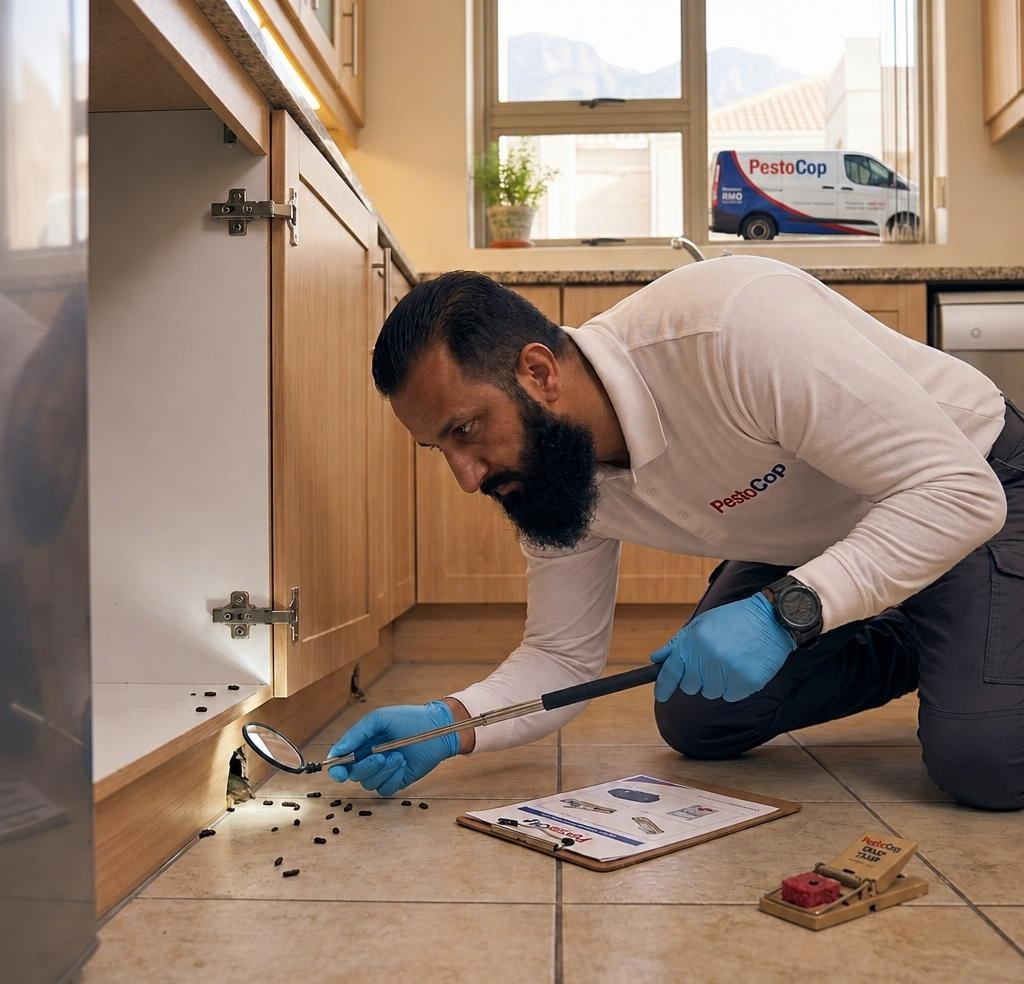
1. Rodent Droppings
Droppings are one of the most common signs of rodent activity.
They may be found near:
- Food storage
- Kitchen cabinets
- Behind appliances
- Warehouses
- Storage rooms
- Along walls
- Near rubbish areas
Fresh droppings may indicate recent activity.
2. Gnaw Marks
Rats and mice regularly gnaw on materials.
You may notice damage to:
- Packaging
- Food containers
- Wood
- Plastic
- Electrical cables
- Stored materials
Repeated gnawing around the same area can be an important warning sign.
3. Scratching Sounds
If rodents are moving inside ceilings, walls or other concealed areas, you may hear scratching, movement or gnawing sounds, particularly when the building is quiet.
4. Grease Marks
Rodents often travel along walls and established routes.
Repeated movement can leave dark or greasy marks along surfaces.
5. Unusual Odours
A persistent musty or unpleasant smell may occur in areas with rodent activity, particularly where rodents are nesting.
6. Damaged Food Packaging
Small holes or gnaw marks in food packaging can be a clear indication that rodents have gained access to stored food.
How Do Rats and Mice Enter Buildings?
Rodents are capable of entering through surprisingly small openings.
Potential entry points include:
- Gaps beneath doors
- Cracks in walls
- Pipe openings
- Drainage areas
- Roof spaces
- Ventilation openings
- Damaged screens
- Gaps around utility lines
- Broken building materials
Once rodents find a reliable source of food, water and shelter, they may continue using the property.
What Attracts Rodents?
Rodents are attracted by easy access to food, water and shelter.
Common attractants include:
- Uncovered food
- Food waste
- Open rubbish bins
- Spilled food
- Poorly stored ingredients
- Standing water
- Leaking pipes
- Cluttered storage areas
- Unmaintained external areas
A building can therefore become attractive to rodents even when there is no obvious infestation.
Termite Control in Oman: Signs, Treatment & Prevention Guide
Read this blog
Are Rats and Mice a Problem for Restaurants?
Yes.
Restaurants and food businesses need to take rodent prevention seriously because food storage, preparation, waste and deliveries can create opportunities for pest activity.
Potential risk areas include:
- Kitchens
- Dry stores
- Food preparation areas
- Waste storage
- Loading areas
- Delivery entrances
- Drainage areas
- External bins
- Ceiling spaces
A structured commercial pest management programme can help businesses identify and address these risks.
Rodent Control for Warehouses in Oman
Warehouses can be particularly vulnerable because they often contain large amounts of stored products and have multiple access points.
Rodent risks can increase when:
- Goods are stored for long periods
- Packaging is damaged
- Doors remain open
- Waste accumulates
- External areas are poorly maintained
- Stock is stored directly against walls
- Incoming deliveries are not monitored
Professional rodent management for warehouses should consider both internal and external areas.
How Does Professional Rodent Control Work?
Professional rat and mouse control in Oman should begin with inspection rather than immediately applying treatment.
Step 1: Inspect the Property
A technician looks for signs of rodent activity and potential entry points.
The inspection may include:
- Internal areas
- External areas
- Storage rooms
- Kitchens
- Waste areas
- Roof spaces
- Service areas
- Loading areas
- Possible harbourage locations
Step 2: Identify Rodent Activity
The technician assesses evidence such as droppings, gnaw marks, tracks and other signs.
This helps determine where rodents are active.
Step 3: Identify Entry Points
Potential access points are identified so they can be addressed where practical.
Step 4: Apply Appropriate Control Measures
Depending on the property and infestation, professional rodent management may use appropriate trapping, monitoring, baiting or other control methods.
The treatment strategy should be selected based on the property and risk involved.
Step 5: Monitor Activity
Rodent control should not end with the first treatment.
Monitoring helps determine whether activity has decreased and whether additional action is required.
Step 6: Prevent Future Infestations
Long-term control may require improvements to sanitation, storage, waste management and building exclusion.
What Is Rodent Proofing?
Rodent proofing is the process of reducing the opportunities for rodents to enter or remain inside a building.
It can include addressing:
- Gaps around doors
- Cracks
- Utility openings
- Damaged screens
- Pipe penetrations
- Roof access points
- Other structural openings
Rodent proofing is particularly important because eliminating existing rodents without addressing entry points may allow new rodents to enter later.
How Can You Prevent Rats and Mice at Home?
Homeowners can take several practical steps to reduce rodent risk.
Store Food Properly
Keep food in sealed containers rather than leaving it exposed.
Keep Rubbish Covered
Use properly closed rubbish containers and remove waste regularly.
Clean Food Spills
Even small food residues can attract pests.
Fix Water Leaks
Address leaking taps, pipes and other unnecessary water sources.
Reduce Clutter
Rodents prefer protected areas where they can hide and nest.
Seal Gaps
Inspect doors, walls, utility openings and other possible entry points.
Keep Outdoor Areas Clean
Remove unnecessary waste, stored materials and potential nesting areas around the property.
How to Prevent Termite Damage in Oman: A Practical Guide for Homeowners and Businesses
Read this blog
Can Rats Climb Walls?
Some rodents are capable climbers and can use rough surfaces, pipes, cables and structural features to access higher parts of a building.
This is why rodent inspections should not focus only on floors.
Ceilings, roof spaces, service areas and upper levels may also need to be considered.
Can Rats Enter Through Toilets?
Rodents can sometimes move through drainage and sewer systems under certain conditions.
However, the exact risk depends on the building’s plumbing and drainage design.
If you repeatedly notice rodent activity around bathrooms, drains or plumbing areas, a professional inspection can help determine whether there is an access route that needs to be addressed.
How Quickly Can a Rodent Infestation Grow?
Rodents reproduce relatively quickly, which means a small infestation can become more difficult to manage if ignored.
The speed of an infestation depends on factors such as:
- Species
- Food availability
- Water
- Shelter
- Temperature
- Access to the building
- Existing population
This is one reason why early action is preferable to waiting until rodent sightings become frequent.
Is DIY Rat Control Effective?
DIY traps and other products may help with limited activity, but they may not address the underlying cause of an infestation.
For example, removing one rodent does not necessarily mean that:
- Other rodents are absent
- The nest has been removed
- Entry points have been sealed
- Food sources have been addressed
- The property is protected against future activity
Persistent rodent activity should be professionally assessed.
How Much Does Rodent Control Cost in Oman?
There is no single price for every rodent control job.
The cost may depend on:
- Property size
- Type of property
- Severity of infestation
- Number of affected areas
- Accessibility
- Required monitoring
- Rodent proofing requirements
- Number of visits
A professional inspection can provide a more accurate understanding of the work required.
Rodent Control for Hotels and Hospitality
Hotels need to protect guest rooms, kitchens, restaurants, storage areas and service spaces from rodent activity.
A pest management programme may include:
- Routine inspections
- Monitoring
- Rodent-proofing recommendations
- Kitchen and food-area inspections
- Waste-area checks
- Documentation
- Follow-up
Quick response is particularly important when rodent activity is reported in guest or food-service areas.
Rodent Control for Offices
Although offices may have fewer food sources than restaurants, rodents can still enter through structural openings, storage areas, waste areas and service spaces.
Office buildings should pay attention to:
- Pantry areas
- Waste rooms
- Storage rooms
- False ceilings
- Utility spaces
- Parking areas
- Loading areas
Regular inspections can help identify activity before it becomes widespread.
Why Choose Professional Rodent Control in Oman?
Rodent infestations are often connected to building conditions rather than a single visible pest.
Professional pest management can help identify:
- Where rodents are entering
- Where they are hiding
- What is attracting them
- Which areas require treatment
- What preventive measures should be implemented
PestoCop provides rodent management solutions for residential and commercial properties in Oman.
Its integrated pest management approach focuses not only on controlling existing rodents but also on reducing the conditions that allow pest activity to continue.
Frequently Asked Questions About Rodent Control
What is the best rodent control method?
The best approach depends on the property, rodent species, infestation level and access points. Effective management generally combines inspection, monitoring, control measures and prevention.
How do I know if I have rats or mice?
Common signs include droppings, gnaw marks, scratching sounds, damaged food packaging, grease marks and unusual odours. A professional inspection can confirm rodent activity.
How do I get rid of rats permanently?
There is no responsible way to guarantee that rodents can never return. Long-term control requires removing existing activity while addressing food sources, shelter and entry points.
Can rats damage electrical wires?
Yes. Rodents can gnaw on various materials, including some electrical cables. If you notice unexplained cable damage along with other rodent signs, arrange a professional inspection.
Are rats dangerous to businesses?
Rodents can create hygiene, property and operational concerns. For food businesses and other commercial facilities, a rodent infestation can also affect customer confidence and business operations.
How often should a business have rodent inspections?
The appropriate frequency depends on the type of business, pest risk, property conditions and previous activity. Higher-risk businesses may benefit from regular scheduled monitoring.
Can cleaning alone get rid of rats?
Cleaning can reduce food and water sources, but it may not eliminate an established infestation. Entry points and nesting areas may also need to be addressed.
How can I stop rats from entering my house?
Reduce access to food and water, keep rubbish covered, maintain clean storage areas, seal potential entry points and arrange professional inspection if signs of rodents continue.
Final Thoughts
Rodent problems rarely disappear simply because the visible signs have stopped.
Successful rodent control in Oman requires a combination of detection, treatment, monitoring and prevention.
Whether you are protecting a home, restaurant, warehouse, hotel, office or industrial facility, identifying rodent activity early can make management easier and help prevent the problem from becoming more serious.
If you have noticed droppings, gnaw marks, scratching sounds or other signs of rodents, consider arranging a professional inspection.
PestoCop provides professional rodent and pest management solutions across Oman to help protect residential and commercial properties.